How to Clean and Store Custom Golf Head Covers So the Logo Lasts
Clean custom golf head covers by material: spot-clean leather and synthetic covers with a damp cloth, hand-wash knit covers in cool water, and always air-dry away from heat. Store them dry, uncrushed and out of direct sun. Customized Golf Head Covers decorates every golf head cover so the logo survives this routine care for seasons of play.
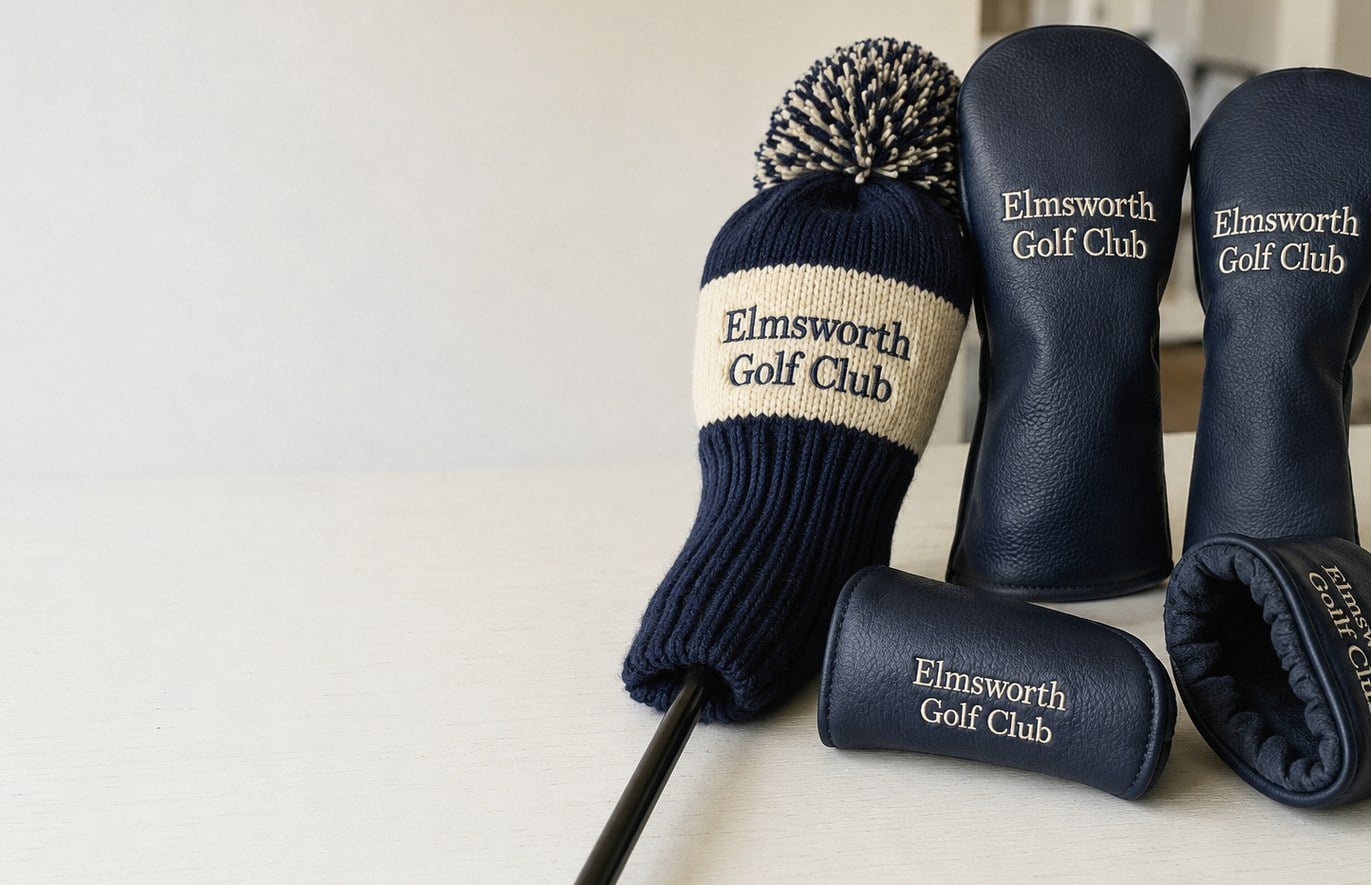
- Leather and synthetic golf head covers: spot-clean with a damp cloth, never soak
- Knit and pom-pom covers: cool hand wash, reshape and lay flat to dry
- Never put a wet head cover back on a club or into a closed bag
- Store spare covers dry, flat or loosely stacked, away from sun and heat
- Free mockup within 24 hours, about 2 weeks after approval
How do you clean custom golf head covers without damaging the logo?
Clean custom golf head covers according to the shell material, not the logo: a damp cloth for leather and synthetic driver covers, a cool hand wash for knit and pom-pom covers, and air drying for every style. The embroidery, knit-in design, patch or print on a cover from Customized Golf Head Covers is built to handle that gentle routine, so the logo usually outlasts the dirt you are removing.
Most damage to head covers does not come from cleaning at all. It comes from the wrong kind of cleaning: hot water, a tumble dryer, a stiff brush on stitched thread or harsh household solvents on leather. Those shortcuts shrink knit, crack leather, flatten pom-poms and pull loose threads at the edge of an embroidered mark.
The simplest rule for anyone receiving a set of custom covers is to clean little and often. A quick wipe after a muddy round prevents the build-up that later tempts people into a hard scrub. The rest of this guide breaks care down by material and by situation, so you can pass the right instructions along with a gift, a team order or a pro shop display.
How should you clean leather and synthetic golf head covers?
Leather and synthetic golf head covers should be wiped with a soft cloth dampened in plain water or a mild soap solution, then dried with a clean towel and left to air-dry at room temperature. Never soak a leather or synthetic driver cover, and never put one in a washing machine, because water trapped in the padding and seams is what causes warping and peeling.
For everyday grime, work from the top of the cover down, wiping the logo panel gently rather than rubbing it. Embroidered logos on leather and synthetic shells can be dabbed with the damp cloth; avoid scrubbing across the stitches. Printed or patch logos should be wiped in the direction of the edges, not against them.
- Grass and mud: let mud dry, brush the loose dirt off with a soft brush, then wipe.
- Scuffs on synthetic leather: a damp cloth with a drop of mild soap usually lifts them.
- Genuine leather: a leather conditioner made for accessories helps keep the surface supple; test it on the inside edge first.
- Avoid: bleach, alcohol wipes, solvent cleaners and heat guns or hair dryers.
The leather and synthetic driver covers on Customized Golf Head Covers are the styles most often chosen for executive and client gifts, so a short care note in the gift box is worth including.
Can knit and pom-pom golf head covers be washed?
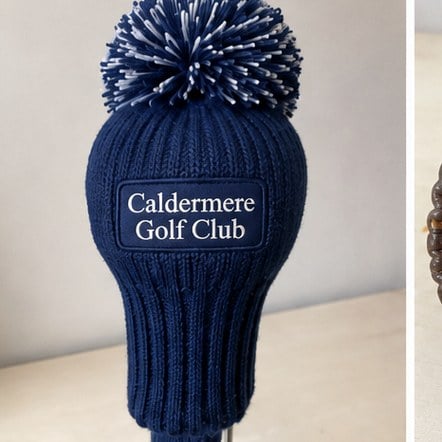
Knit and pom-pom golf head covers can be washed, but by hand in cool water with a mild detergent, not in a hot machine cycle. Squeeze the water out gently, never wring the cover, reshape it by hand and lay it flat on a towel to dry. A knit-in logo or embroidered mark on a knit cover handles a careful hand wash well.
Knit covers are the most forgiving style on the course and the most vulnerable in the laundry room. Heat shrinks the yarn, agitation fuzzes the surface and a dryer can turn a full pom-pom into a flat tuft. Treat a knit cover the way you would treat a good wool hat.
- Brush off loose grass and dirt while the cover is dry.
- Fill a basin with cool water and a small amount of gentle detergent.
- Submerge the cover, press the suds through it and rinse in clean cool water.
- Press out excess water inside a rolled towel.
- Reshape the sock and pom-pom by hand and dry flat, away from radiators and direct sun.
If a knit cover only has a small mark, spot-clean that area instead of washing the whole cover. Fewer full washes keep the knit looking new for longer. Browse the knit and pom-pom driver covers to see the styles this applies to.
What should you do when golf head covers get wet on the course?
When golf head covers get wet on the course, take them off the clubs as soon as you can, shake off the water, blot them with a towel and let them air-dry fully, open end down, before putting them back on. A wet cover left on a club traps moisture against the club head and inside the padding, which leads to odors, mildew and stains.
Rain rounds are where most head covers are quietly ruined. The cover goes back on the driver soaking wet, the bag is zipped shut in a car trunk and the cover sits damp for days. By the next round, the lining smells and the color on a leather or synthetic shell may have started to mark.
- Hang or stand covers in a ventilated room, not on a heater or in a sunny window.
- Stuff knit covers loosely with a dry towel to help them hold their shape while drying.
- Leave the golf bag open overnight so the club heads and the bag interior dry as well.
- Check putter covers with magnetic or hook-and-loop closures; moisture collects in the closure area first.
Fully dry covers can go straight back into play. Covers that still feel cool to the touch are not dry yet.
How should spare custom golf head covers be stored between events?
Spare custom golf head covers should be stored clean, completely dry and uncrushed, in a cool indoor space out of direct sunlight, ideally in the cartons or bags they shipped in. Leather and synthetic covers keep their shape best standing upright or lying in a single layer; knit covers can be folded loosely or stacked without heavy weight on top.
Storage matters most for organizations that order ahead: a club holding member gifts for next season, a company keeping client gifts on hand, or a tournament committee with extras after the event. Those covers may wait months before anyone uses them, and a garage, car trunk or hot storage unit can fade colors and stiffen leather in that time.
| Cover style | Best storage position | Watch out for |
|---|---|---|
| Leather and synthetic driver covers | Upright or single layer | Crushing, heat, sun fading |
| Fairway and hybrid sets | Kept together as a set | Sets getting split up |
| Knit and pom-pom covers | Loosely folded or stacked | Moths, damp, flattened pom-poms |
| Blade and mallet putter covers | Closures fastened, laid flat | Closures snagging other covers |
Label cartons by style and, for personalized covers, by recipient name, so the right cover reaches the right golfer when the time comes.
Which golf head cover material is easiest to look after?
Synthetic leather golf head covers are generally the easiest to look after, because they wipe clean, shrug off light rain and hold their shape without special care. Genuine leather looks richer but benefits from occasional conditioning, while knit covers need the gentlest handling yet are the simplest to wash by hand.
Care expectations are worth weighing before you order, especially for groups that will not baby their gear. A junior golf team or a busy scramble field will treat covers differently than an executive receiving a gift box.
| Material | Everyday cleaning | Best for |
|---|---|---|
| Synthetic leather | Damp cloth wipe | Teams, outings, frequent play |
| Genuine leather | Damp cloth plus occasional conditioner | Executive and client gifts |
| Knit and pom-pom | Cool hand wash, dry flat | Holiday gifts, club colors, classic looks |
Whatever you choose, ask for the material in your quote request and mention how the covers will be used. Customized Golf Head Covers can then suggest a style and decoration method that suits both the look and the wear the covers will see. The fairway and hybrid cover sets are available in several of these materials.
How do decoration methods hold up to cleaning and wear?
Embroidered and knit-in logos are the most durable decoration methods on golf head covers, because the design is made of thread or yarn rather than sitting on the surface. Patches hold up well when the edges are stitched down, and printed logos last best on smooth synthetic shells that are wiped clean rather than scrubbed.
Each method has a care point worth knowing:
- Embroidery: dab, do not scrub, and never pull at a loose thread; trim it carefully instead.
- Knit-in designs: the logo is part of the fabric, so treat the whole cover as knit and hand-wash it cool.
- Patches: wipe around the patch edges and let the area dry fully so the backing stays flat.
- Printing: avoid abrasive pads, solvents and heat, which are the usual causes of a print looking worn.
If durability matters more than anything else, say so when you request a quote. The embroidered custom golf head covers page explains how stitched logos, names and monograms are produced.
What care instructions should go out with a gift or team order?
A short care card with a gift or team order of custom golf head covers should cover three points: wipe or hand-wash only, air-dry completely before putting the cover back on the club, and store it out of heat and sun. Those three habits prevent almost every problem that shortens the life of a cover.
Recipients rarely ask how to look after a head cover, and many will assume a knit cover can go in with the towels. A few lines in the box, in the team bag or in the event welcome email saves the covers from that first mistake.
Program owners can also build care into the order itself. Pro shops can keep a simple care sign beside their display, coaches can mention it at the first team meeting and corporate gift senders can add one line to the card. When you are ready to plan an order, request a quote and Customized Golf Head Covers will return a free mockup within 24 hours, with delivery about 2 weeks after approval.
Frequently asked questions
Can I put custom golf head covers in the washing machine?
Custom golf head covers should not go in the washing machine. Leather and synthetic covers absorb water into the padding and can warp, and knit covers can shrink or fuzz in a machine cycle. Spot-clean leather and synthetic styles with a damp cloth and hand-wash knit styles in cool water, then air-dry every cover completely before it goes back on a club.
How do I get mud off a knit golf head cover?
Mud comes off a knit golf head cover most easily once it has dried. Brush the dried mud away with a soft brush, then spot-clean any remaining mark with cool water and a little gentle detergent. Rinse, press the water out with a towel and dry the cover flat. Customized Golf Head Covers knit-in and embroidered logos handle this careful cleaning well.
Why does my golf head cover smell after a rainy round?
A golf head cover smells after a rainy round because moisture stayed trapped in the lining and padding, usually because the cover went back on the club or into a closed bag while still wet. Take damp covers off, blot them, and let them air-dry fully in a ventilated room. Leaving the bag open overnight helps the club heads dry as well.
Can a hair dryer speed up drying a wet golf head cover?
Golf head covers should not be dried with a hair dryer, heater or tumble dryer. Direct heat can shrink knit yarn, stiffen or crack leather and distort synthetic shells and printed logos. Blot the cover with a towel, stuff knit styles loosely with a dry cloth to hold their shape and let air at room temperature do the rest, even if it takes overnight.
How often should custom golf head covers be cleaned?
Custom golf head covers only need a full clean when they are visibly dirty or have been through a wet round. A quick wipe of leather and synthetic covers after muddy play, plus an occasional hand wash for knit covers, is usually enough. Cleaning little and often prevents the heavy build-up that tempts golfers into harsh scrubbing that wears a logo.
Will sunlight fade a custom golf head cover left in the car?
Sunlight and heat in a parked car can fade and dry out a custom golf head cover over time, particularly bright knit colors and genuine leather. Store golf bags indoors when possible and keep spare covers in their cartons in a cool room. Customized Golf Head Covers recommends this especially for gift covers that may wait weeks before being handed out.
How do I fix a flattened pom-pom on a golf head cover?
A flattened pom-pom on a golf head cover can usually be revived by steaming it lightly from a distance or dampening it, then fluffing the strands apart with your fingers and letting it dry upright. Avoid direct heat on the yarn. Storing knit and pom-pom covers without heavy weight on top keeps the pom-pom full in the first place.
Should leather golf head covers be conditioned?
Genuine leather golf head covers benefit from an occasional coat of conditioner made for leather accessories, which keeps the surface supple and less likely to crack. Test the product on an inside edge first and keep it off embroidered thread. Synthetic leather covers do not need conditioning; a damp cloth wipe is all Customized Golf Head Covers suggests for them.
What is the best way to keep a fairway and hybrid head cover set together?
A fairway and hybrid head cover set stays together best when the covers live on their clubs during the season and are stored side by side in one labeled bag or carton during the off-season. Covers with club numbers or names make sorting easy. Customized Golf Head Covers can add numbers so a set is simple to match back to its clubs.
Can a loose thread on an embroidered golf head cover be repaired?
A loose thread on an embroidered golf head cover should be trimmed close with small scissors rather than pulled, because pulling can unravel nearby stitches in the logo. If a section of the design has lifted, a tailor or embroidery shop can usually secure it. Dabbing rather than scrubbing during cleaning keeps embroidered logos from snagging in the first place.
Do magnetic putter cover closures need special care?
Magnetic closures on putter covers need little care beyond keeping them clean and dry. Wipe away grit that collects around the magnet, let the closure area dry fully after rain and keep the cover away from cards and devices that magnets can affect. Customized Golf Head Covers blade and mallet putter covers should be stored with closures fastened so they do not catch on other gear.
How should a club store custom golf head covers ordered for next season?
A club storing custom golf head covers for next season should keep them in their original cartons in a cool, dry indoor room, away from sunlight, damp floors and heat sources. Label each carton by style, and by recipient for personalized covers. Checking the stock once mid-way through the off-season catches any damp or pest problems before the covers are handed out.
Get a free mockup for your golf head covers
Send your logo or idea and the quantity you have in mind. Customized Golf Head Covers returns a free mockup within 24 hours, you approve the design before anything is produced, and standard turnaround is about two weeks with faster options available. Get a custom quote.