Most golf outing gifts have a short life. The sleeve of logo balls gets played and lost, the towel ends up in a trunk, the divot tool disappears into a bag pocket. A head cover is different: it clips onto the most valuable club in the bag and stays there, round after round, with your logo facing up every time the player reaches for the driver. That staying power is exactly why head covers have become a staple of tournament tee gifts and sponsor packages — but it also means a badly chosen cover is a badly chosen gift that follows the recipient around. Here is how to pick one that actually gets used.
The gift that passes the parking-lot test
The useful question to ask about any tee gift is whether it survives the walk from the pro shop to the car. Consumables get consumed and forgotten; apparel gets worn if it fits and buried if it doesn’t. A head cover clears that bar because it has an obvious home the moment the golfer opens their bag. It is functional, it is visible, and unlike a shirt it has no size to get wrong. For a sponsor whose whole goal is repeat brand exposure, a cover that rides on a driver for a full season is doing more work than a gift that gets used once. The catch is that this only holds if the cover is one a golfer would actually choose to keep on their clubs, which turns the decision into a real selection problem rather than a bulk-buy afterthought.
One driver cover, or a matched set?
The first fork is scope. A single driver cover is the highest-impact, lowest-cost option: the driver is the most-photographed club, the cover is large enough to carry a logo cleanly, and you are buying one piece per golfer. A matched set — driver plus fairway and hybrid covers, sometimes a putter cover — makes a far stronger impression and reads as a premium prize rather than a giveaway, but it multiplies the per-recipient cost by the number of covers. It helps to know how many covered heads a bag actually has before you decide, because a full bag is not fourteen covers.
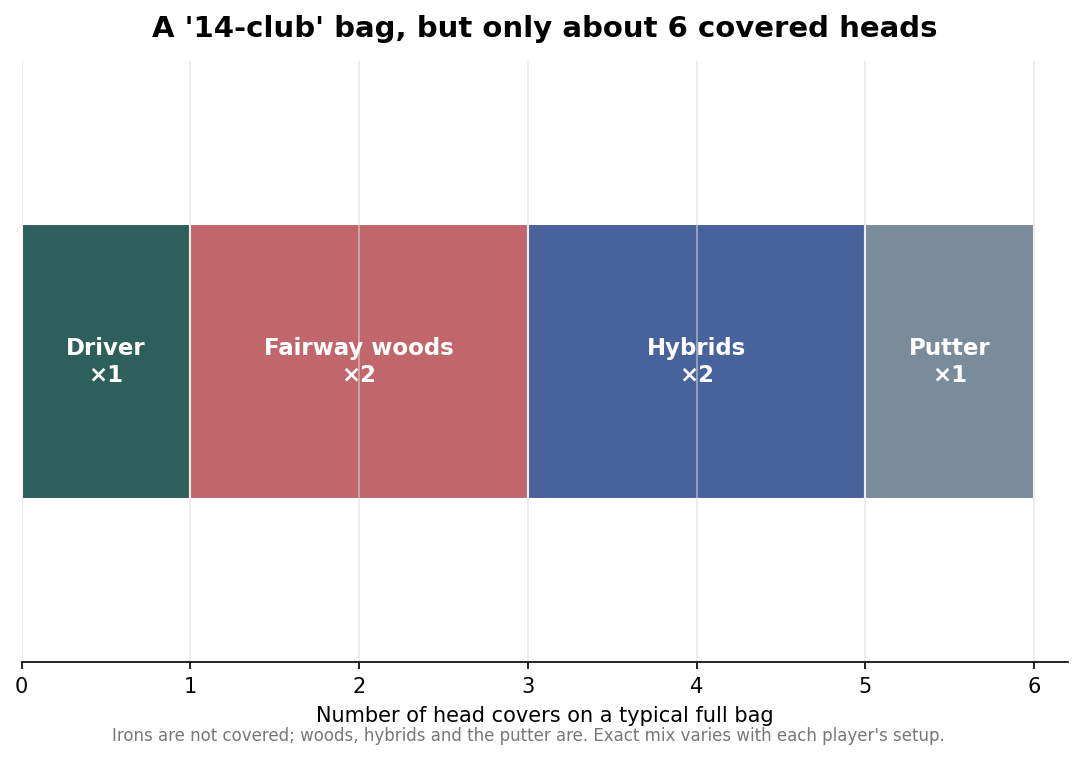
For most events, the driver cover is the right default and the matched set is a tier reserved for smaller, higher-value fields — a member-guest, a charity flight prize, a VIP sponsor gift. If your budget only stretches to one cover per player, put it on the driver every time, because that is the club whose cover is seen most and lost least.
A gift only works if it fits the club
A head cover that doesn’t fit is a head cover that comes off, and a cover that comes off is a gift that gets thrown in a drawer. Modern drivers run right up to the governing-body limit of 460cc, so a driver cover has to be built to swallow a 460cc head; a cover cut for an older, smaller wood will not seat properly on today’s clubs. Fairway and hybrid covers are sized to modern woods and hybrids respectively and are not interchangeable — a hybrid is a smaller, more compact head than a 3-wood. Putter covers split by head shape entirely, with blade and mallet putters needing completely different covers. When you are buying in bulk for a crowd whose exact clubs you don’t know, the safe move is a driver cover rated to 460cc, since that covers essentially every current driver in the field.
Sizing the order to your event
Once you know what you are ordering, the quantity question is mostly about not coming up short. Order to the size of your field, then add a margin on top for sponsors, volunteers, staff, no-show replacements, and the inevitable request for a few extras after the fact. A margin of roughly fifteen percent above the player count is a reasonable planning figure for a typical outing, adjusted up if you have a lot of sponsors to thank.
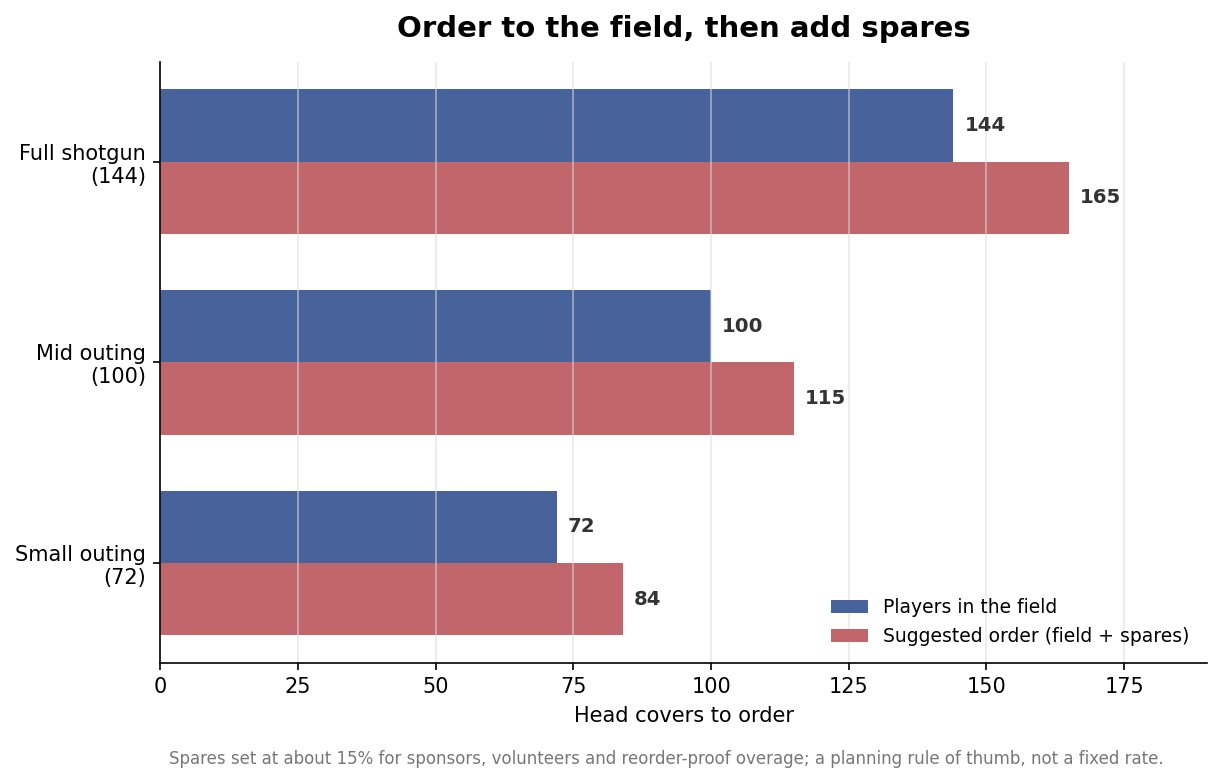
The other half of event planning is lead time. Custom head covers are decorated to order, so a realistic production window is several weeks, and you want your artwork approved well before that clock starts. Ordering a matched set rather than a single cover does not usually add production time, but it does multiply the number of pieces that have to be decorated, which can matter when a shop is quoting a rush. The funding side is worth settling early too: outings typically cover gift costs one of three ways — a sponsor underwrites them, a share of sponsorship dollars is allocated, or the cost is folded into the registration fee — and knowing which one you are using tells you how much cover you can afford per player.
Personalize it so it doesn’t get re-gifted
The difference between a cover that stays on a bag and one that gets passed along is usually personalization. A tournament logo alone makes it a souvenir; adding the event name and year makes it a keepsake, and adding the player’s initials or a flight designation makes it theirs. If the gift is a prize rather than a mass tee gift, individual names or numbers are worth the small upcharge because they remove any chance the recipient treats it as generic swag. Pre-bagging the covers with the rest of the tee gift so each player gets a tidy package, rather than a loose pile at check-in, is a small logistics habit that makes the whole gift feel considered. Get the fit, the scope, and the personalization right, and a head cover stops being a giveaway and becomes the rare tournament gift that is still doing its job a year later.